Namreta Kumar
↩ Index
Studio · Museography Case File 04 · 2026

The still centre and the turning

“We did not set out to build a container for the past. We wanted a building that keeps by giving itself away — its ground to the city, its centre to no one.”

— Felipe Escudero, Estudio Felipe Escudero
Project
Museo Nacional del Ecuador (MUNA)
Call
National open call for preliminary design
Site
Avenida República × Avenida Eloy Alfaro, Quito
Role
Cultural strategy & museography
Design lead
EFE · Estudio Felipe Escudero
Year
2026
Output
Narrative brief · descriptive memory framing · design statement · press narrative
Museo Nacional del Ecuador · Quito
§ ·
About the proposal

Ceremonial ground, facing La Carolina

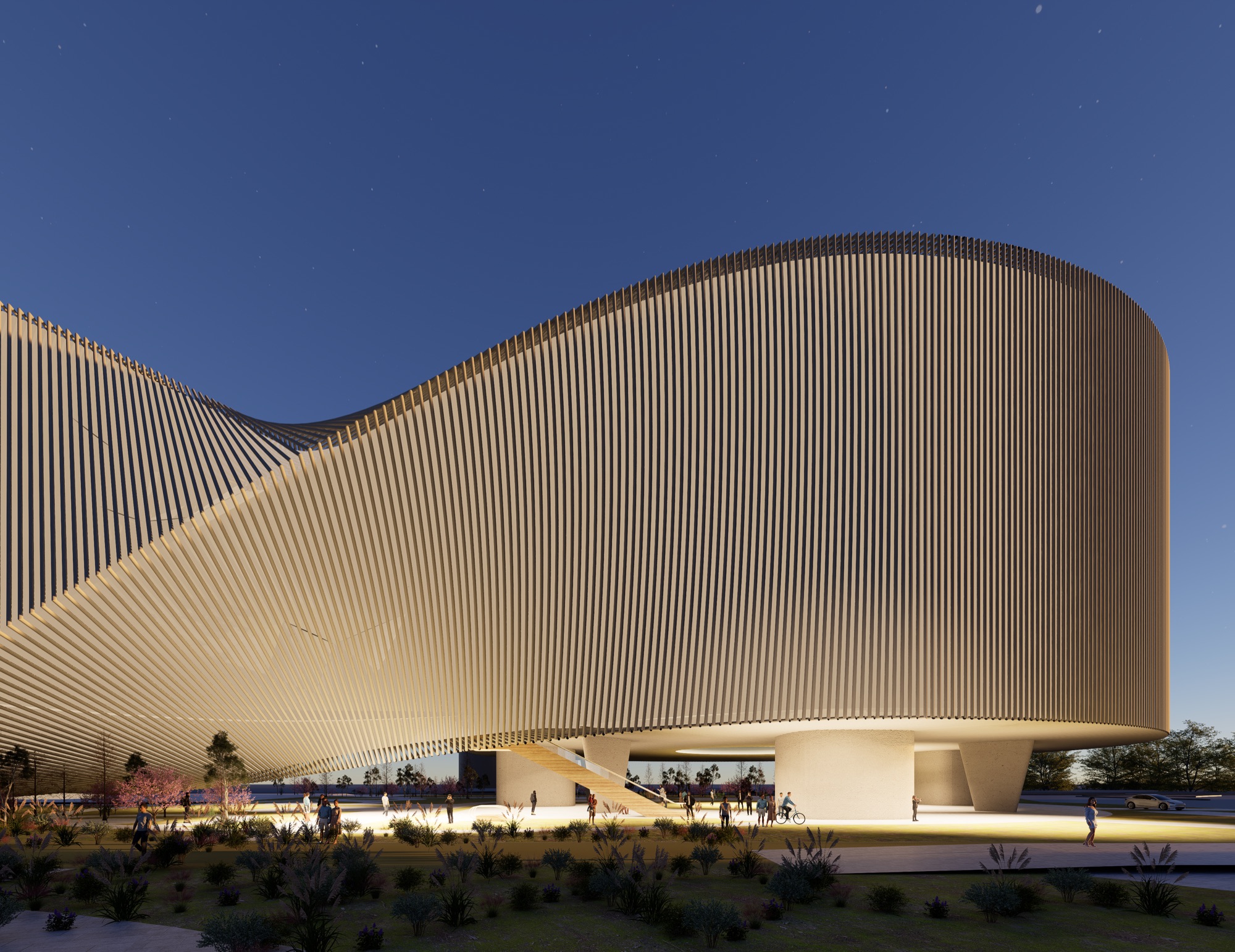
Set on ceremonial ground at the intersection of Avenida República and Avenida Eloy Alfaro, opposite Parque La Carolina, the proposal pairs a circular exhibition volume with a prismatic reserve and a connecting bridge, and gives half the building to the city as ticketless commons. At its heart, an oculus set on the equator drops a column of noon light onto the agora floor at each equinox, where a full-size quipu is laid into the stone — the country's name written, twice a year, in light on its own floor.

Movement One

The Still Centre

— what the museum refuses to move
The Premise · why the institution exists

What survives the turning — Wiñaypacha & pachakuti

Ecuador's patrimony has outlived four overturnings of its world — conquest, colony, republic, and a plurinational refounding. Each was a pachakuti, the overturning of one age into the next. What survives the turnings is held by the institution that survives them: the museum operates in Wiñaypacha, the eternal time-space, keeping the country's memory across every overturning.

Wiñaypacha · the eternal time-space Aequator · 0°0'0" The still centre Unclaimed Hawa The eternal lifted to the lit crown Uku The living the seed Kay The temporal the country being made
The cosmology wheel Uku, Kay and Hawa turning around the still centre, held in wiñaypacha.

“Keeping the country's memory across every overturning of its world.”

Descriptive Memory · §1 Vision & Concept
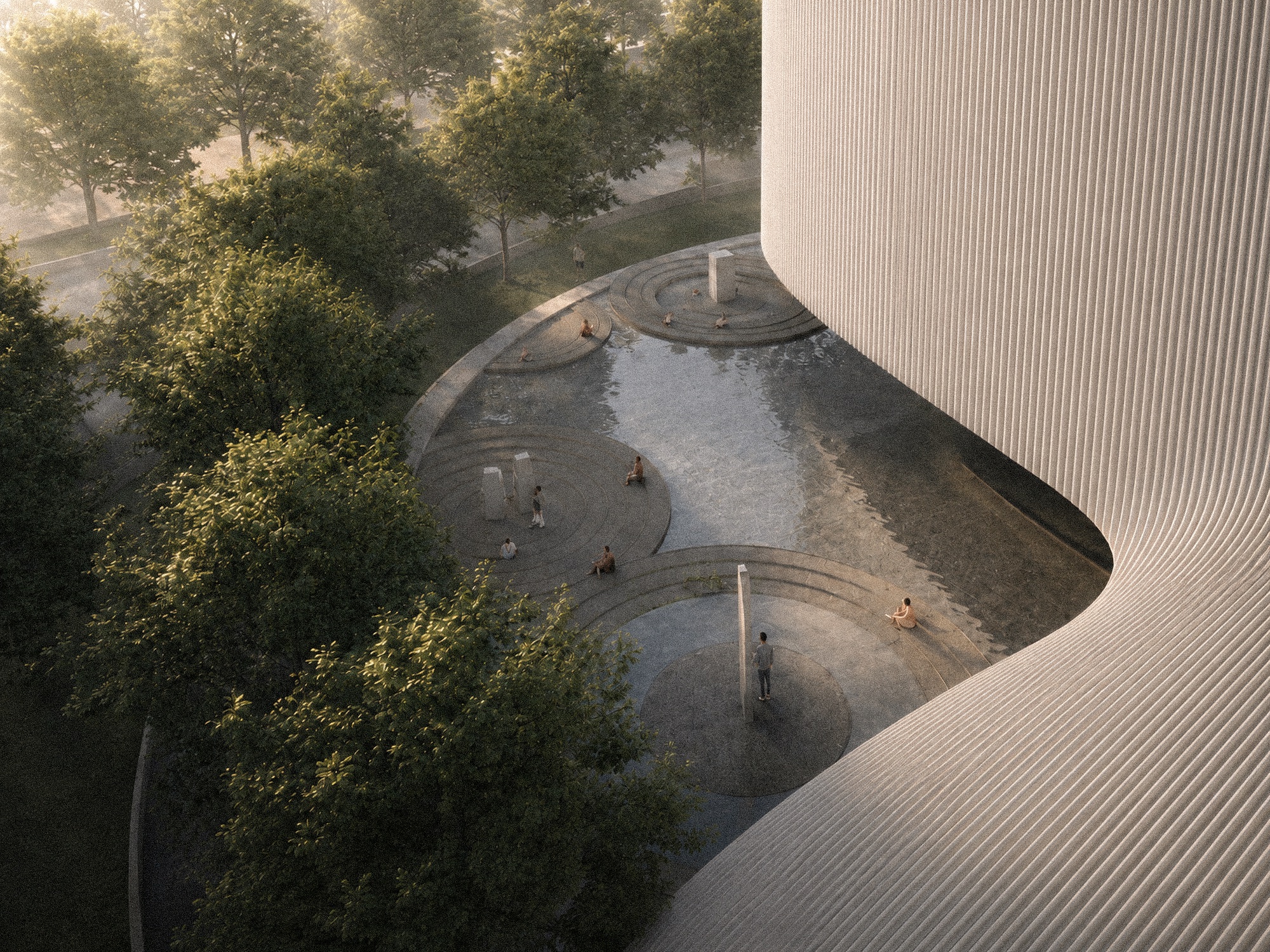
The vocal plazas
The Civic Ethic · what it gives before it asks

The ground given away — the civic sanctuary

Before anyone rises or pays, half the building is already open — agora, lobby, bridge, and the Depth below, held as commons. A school group from Esmeraldas, a grandmother from Loja, a Sapara teenager recording oral history: none of them needed a ticket to stand in their own national museum.

“The country can stand in its own national museum without paying for the right to be there.”

Descriptive Memory · §3 The Civic Sanctuary
The Plurinational Ethic · how plurality is held

The unclaimed centre — plurality by emptiness

The frame holds plurality by keeping the centre unclaimed. The aequator at the centre belongs to no nation; the collection is ordered by medium and making across cultures, not by region — so no people is given a wing to be visited once and left behind.

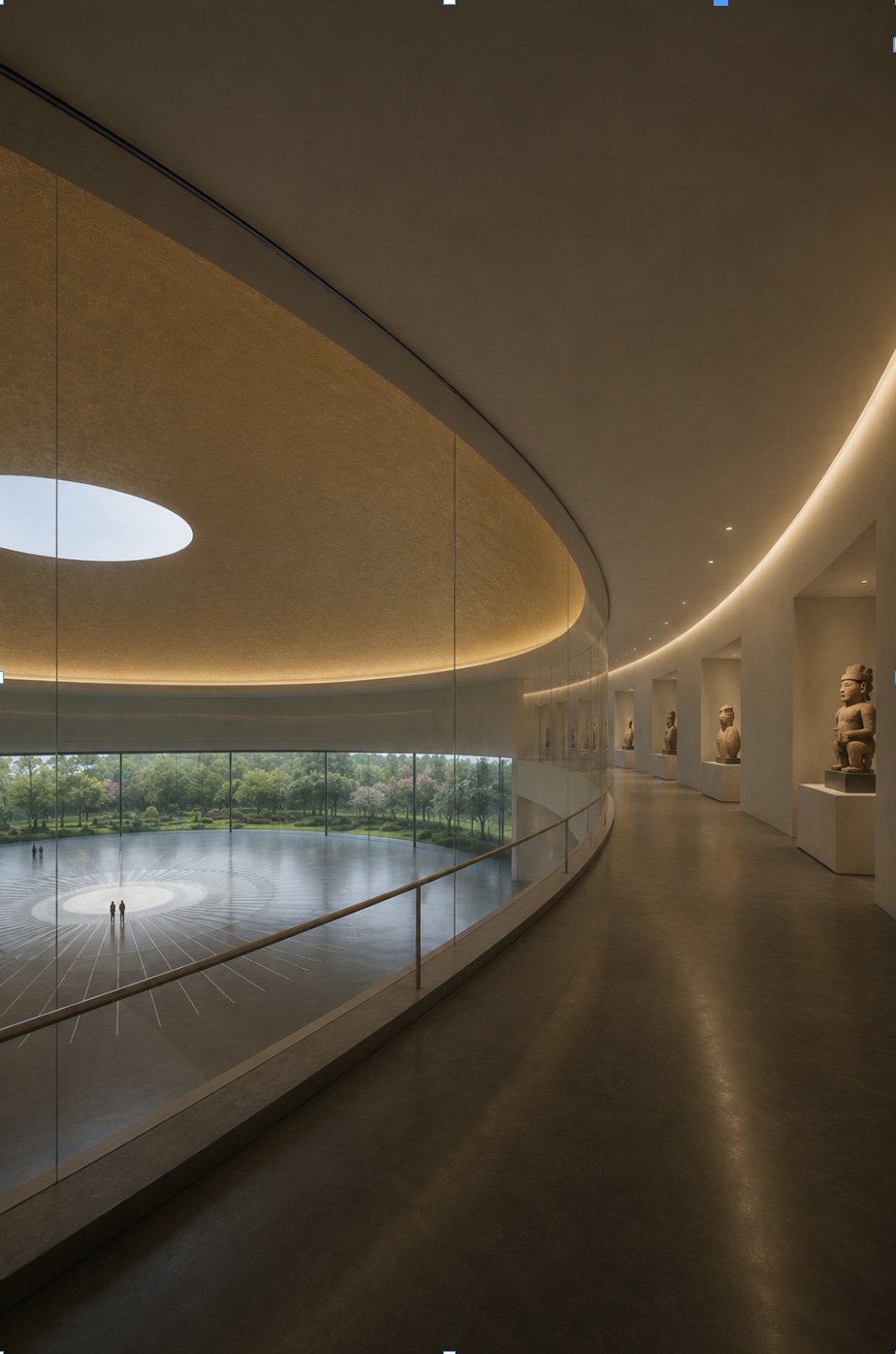
The gallery ring above the agora

“The frame holds plurality before it holds anything else, and it holds it by keeping the centre unclaimed… The aequator at the centre belongs to no nation.”

Descriptive Memory · §1 The Living Pillars
Movement Two

The Turning

— what moves around the centre
The Frame · the architecture

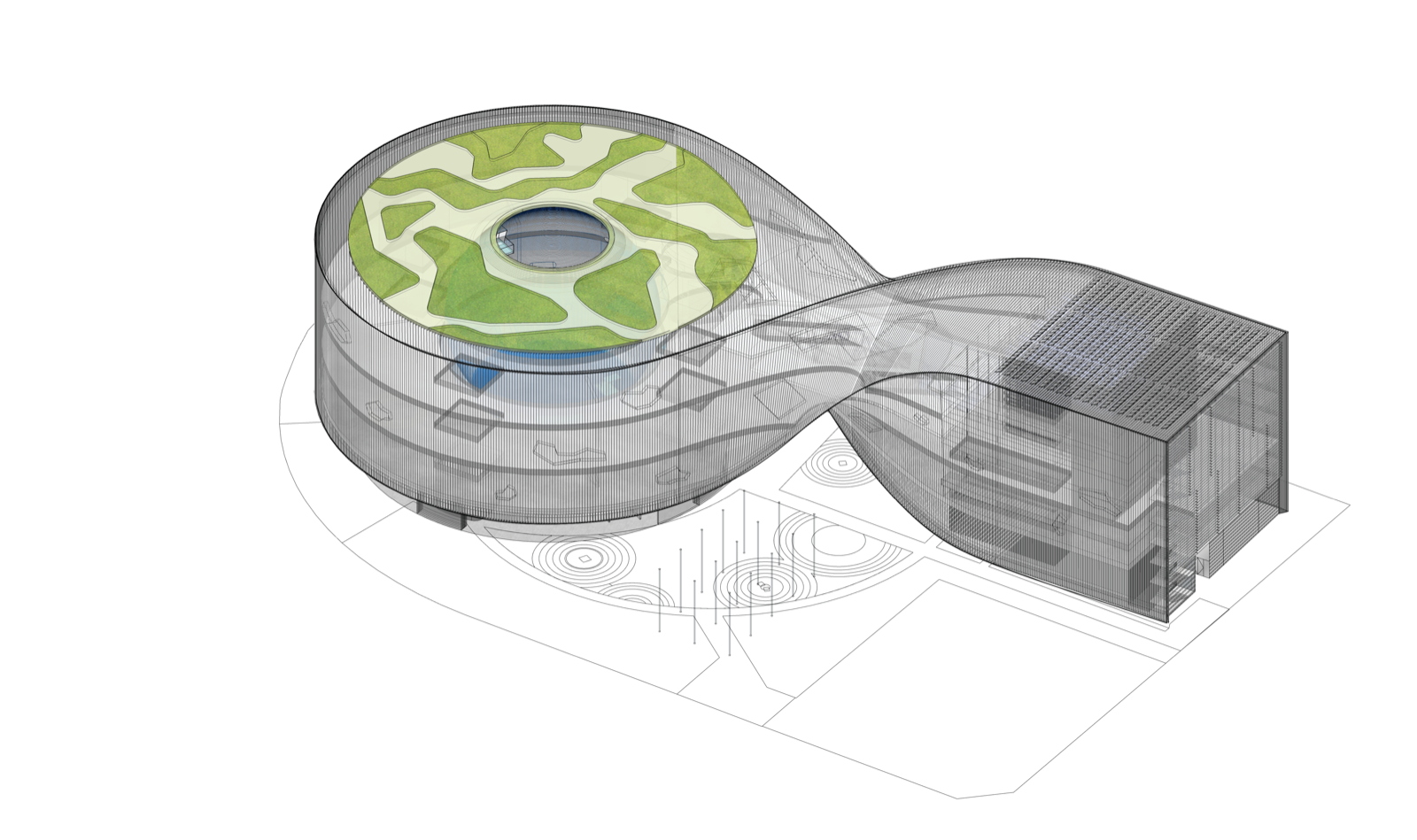
Three forms in reciprocity — circle, prism, bridge

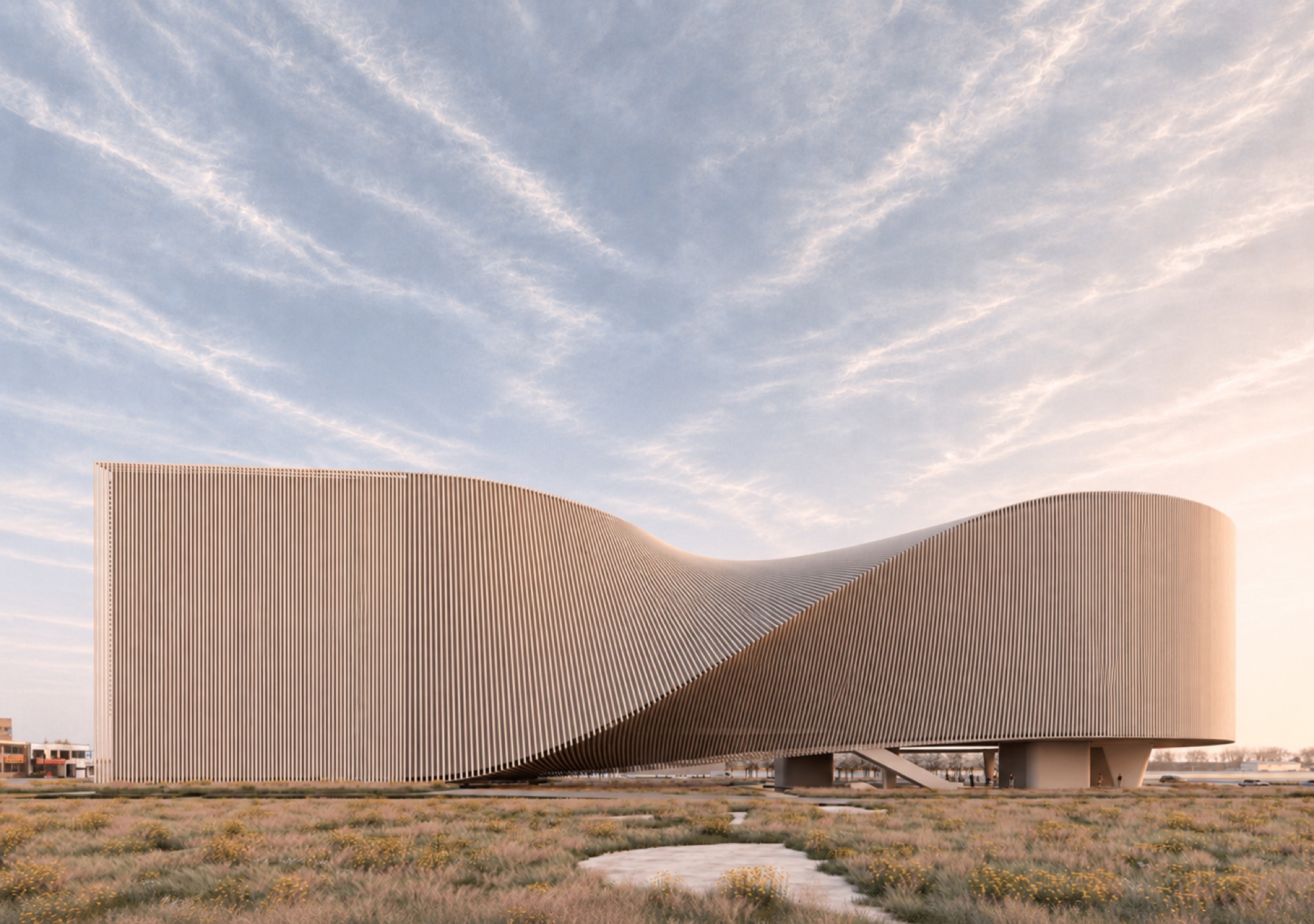
A circular volume holds the exhibition and convokes the public; a prismatic volume holds the reserve and safeguards; a bridge mediates between them — library, coworking, conservation in active practice — split by a seismic joint so each performs apart. Together they build an envelope in which plurality lives in residence.

Circle, bridge, prism
Circle · convokes Bridgemediates across the movement Prism · safeguards

“The volume convokes and opens… the volume safeguards and affirms… the three forms operate in reciprocity.”

Descriptive Memory · §1 Three Forms, One Frame
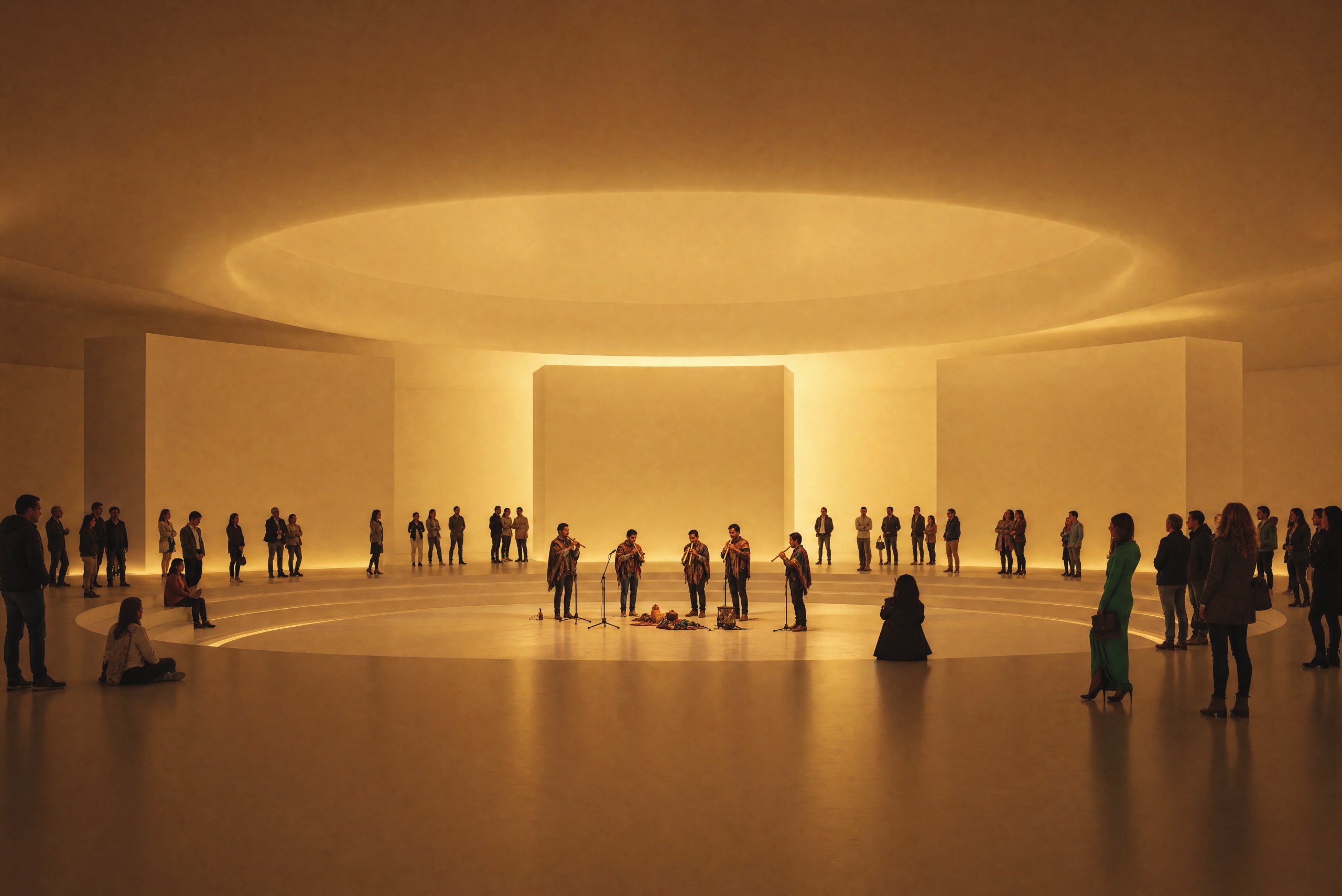
The agora
The Experience · the cycle, and the voice through it

The turning of three times — Uku · Kay · Hawa

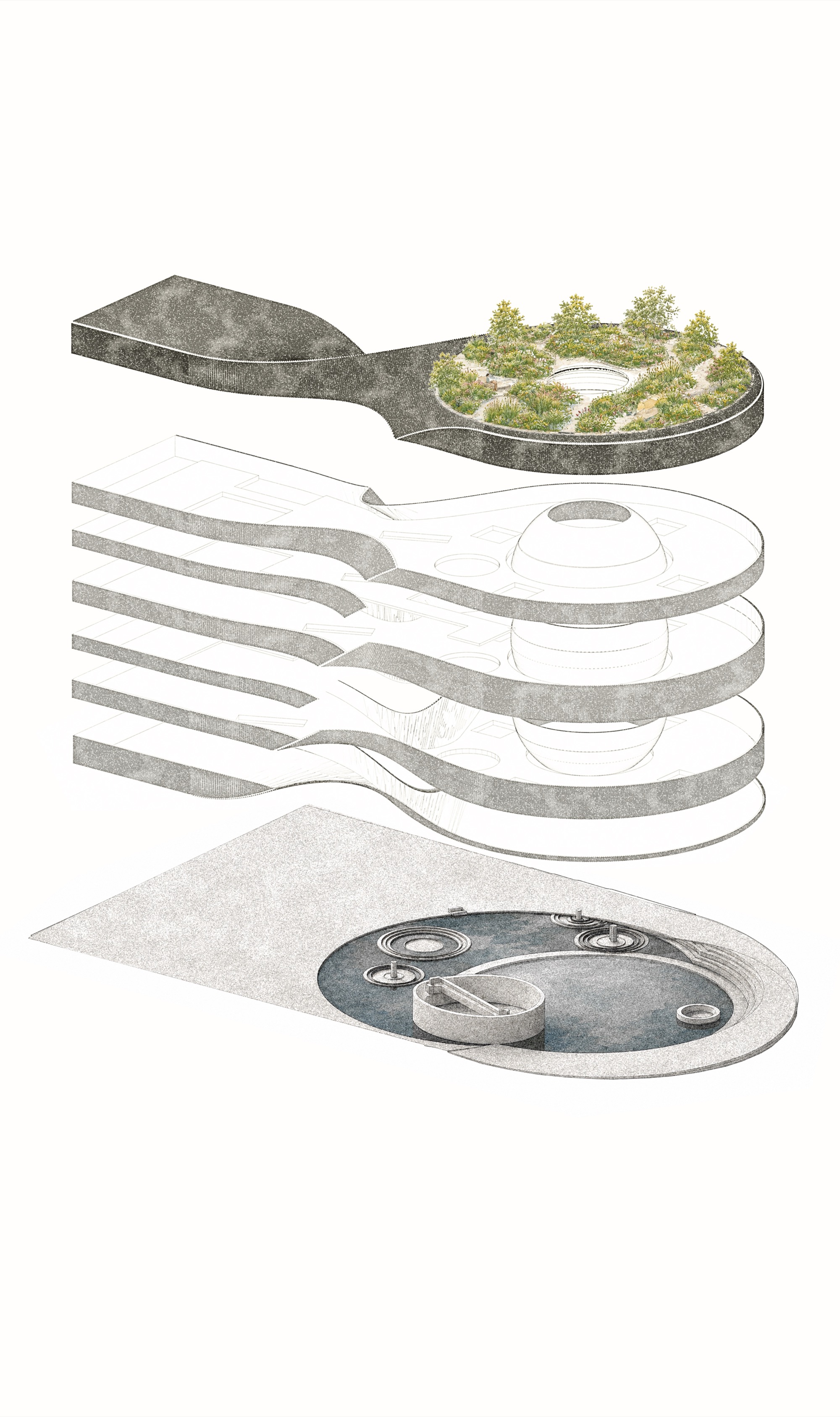
The building reads against the grain of the written line. Drawn from nayrapacha — where the past lies ahead and visible, the future behind and below — the eternal is lifted to the lit crown and the living present sits at the base. It is not a climb but a cycle: Three floors carry it, each named in Kichwa: Uku, the living seed, a museum that changes every few months; Kay, the temporal, the country in the act of being made; and Hawa, the eternal.

Voice is plurinational infrastructure, not an ambience. It is made below in the Depth — the vocal plaza, the recording facility — kept in the middle as collection, and sounded again at the crown as living performance: the marimba, the décima, the oral traditions in the present tense. Audio is collection, not an accessibility overlay.

Uku · Kay · Hawa

“It is a cycle. The living seeds the temporal; the temporal rises into the eternal; the eternal returns, through its origins, to seed the living again.”

Descriptive Memory · §3 The Three Times
The Institutional Honesty · what it declares

The honesty of what is missing — the held spaces

The collection is uneven, and the building does not hide it. Two registers of held space run through the floors — to be uncovered and to be borrowed — reserved and marked, built with the peoples whose history they hold. The national museum becomes a node that hosts what the regions keep, not a centre that claims to own them.

“What the museum lacks, it declares — and the declaration is the beginning of the living institution.”

Descriptive Memory · §3 The Held Spaces
Coda

The return to the country

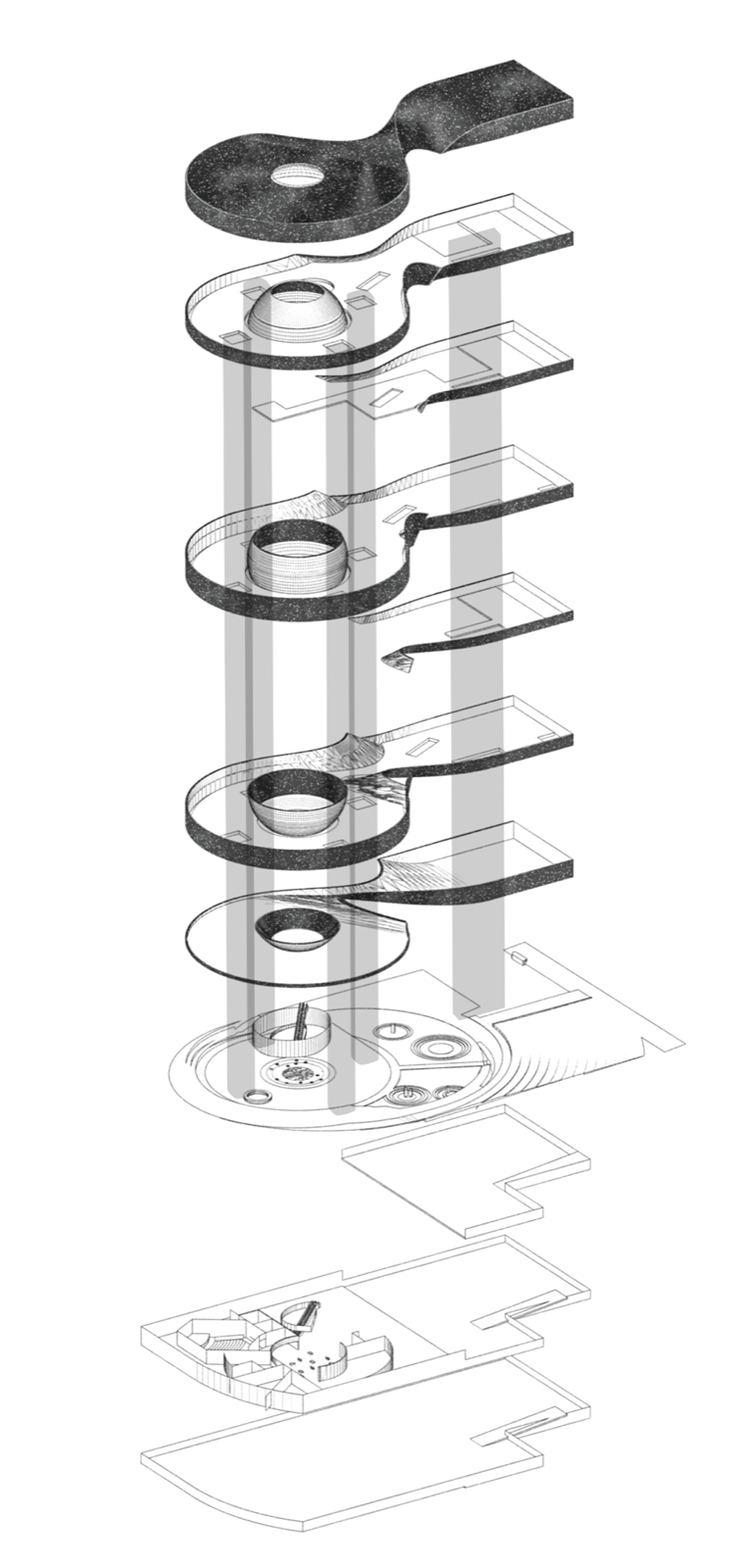
The visitor rises from Hawa onto the green roof, where the páramo is lifted to the top of the building and the section through time gives onto city, volcanoes, and the Andes at once. The museum ceases to be an object and becomes a platform — a place from which to read the territory the whole building was built to keep.

The section through time, exploded

“The museum ceases to be an object and becomes a platform — a place from which to read the territorial dimension of the country.”

Descriptive Memory · §3 The Three Times
Museo Nacional del Ecuador at night
§ ·
Closing

This is the museum for Ecuador.

“Plurality, voice, return: what the institution has carried across every overturning of its world, and what it is built now to keep.”

Descriptive Memory · §1 The Living Pillars
Credits
Design lead
  • EFE · Estudio Felipe Escudero · Ecuador
Architecture
  • OPEN Architecture · China / US
  • DLPS · De la Piedra Arquitectos · Perú
Landscape
  • HLA · Harari Landscape · México
Engineering · Sustainability · Structure
  • ARUP · UK
Cultural strategy & museography
  • Namreta Kumar · US
Scenography
  • Ducks Scéno · France